

Understanding Bottle Capacity and Weight Requirements
Selecting the proper PET preform mold starts with defining the target bottle's capacity and weight. These parameters directly affect wall thickness and structural integrity. Correctly balancing weight and capacity ensures robust bottles suitable for transportation, stacking, and material efficiency.
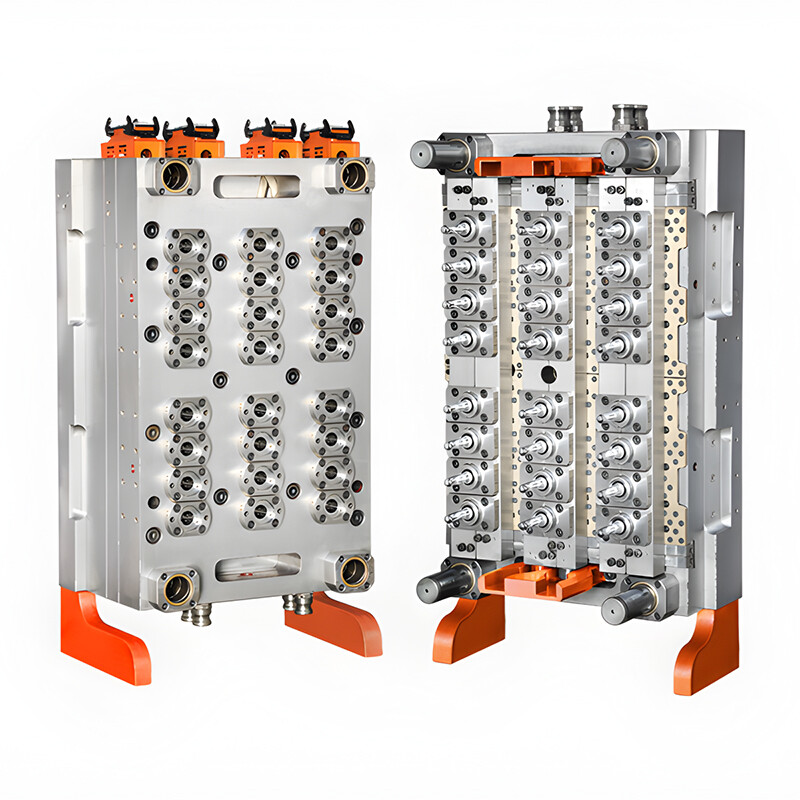
PET Preform Injection Molding Process
The PET preform injection molding process involves heating PET resin and injecting it under precise pressure into molds. The result is a preform that meets strict thickness, height, and dimensional specifications.
Polyethylene terephthalate (PET) is a thermoplastic polyester known for:
- High crystallinity and smooth surface finish
- Excellent dimensional stability and resistance to creep
- Durability under mechanical stress, including fatigue and friction
Advantages and Considerations of PET Preform Manufacturing
PET provides several advantages that make it ideal for preform production:
- High hardness and low wear resistance, ensuring durability
- Superior electrical insulation with low temperature sensitivity
- Chemical resistance, non-toxicity, and excellent weatherability
- Low water absorption, resistant to weak acids and organic solvents
Manufacturers must also monitor wall thickness, compressive strength, and cap opening fatigue to maintain product quality. Dedicated quality control ensures compliance with industry standards.
Applications of PET Preforms
PET preforms undergo blow molding to form bottles for beverages, mineral water, cosmetics, pharmaceuticals, dietary supplements, and laboratory reagents. The two-step process (injection molding + blow molding) allows precise control over final bottle dimensions and strength.
Selecting the Right Mold for Your Production
Choosing the correct PET preform mold requires alignment of:
- Injection machine specifications
- Target bottle capacity and weight
- Desired wall thickness and structural integrity
High-quality molds ensure uniform heating, smooth resin flow, and precise cavity dimensions. Advanced features such as hot runner systems or multi-cavity molds optimize production efficiency and reduce material waste.