

When it comes to the production of water bottle caps, the water bottle cap mould plays a pivotal role. As a trusted supplier in the industry, we understand the significance of maintaining these moulds to ensure consistent quality and efficient production. In this blog, we'll delve into the maintenance frequency of water bottle cap moulds, exploring various factors that influence it and providing insights to help you optimize your production process.
Understanding the Importance of Mould Maintenance
Before discussing the maintenance frequency, it's essential to understand why it's so crucial. A well - maintained water bottle cap mould not only produces high - quality caps but also extends the lifespan of the mould itself. Regular maintenance helps prevent issues such as surface wear, corrosion, and part deformation. This, in turn, reduces the risk of production downtime and associated costs due to mould failures.
Factors Influencing Maintenance Frequency
Production Volume
One of the most significant factors affecting the maintenance frequency of a water bottle cap mould is the production volume. High - volume production means that the mould is in use for more extended periods, subjecting it to continuous wear and tear. For a manufacturing plant that produces hundreds of thousands of 28/30mm water bottle caps daily, the mould will experience more friction, heat, and pressure compared to a lower - volume producer.
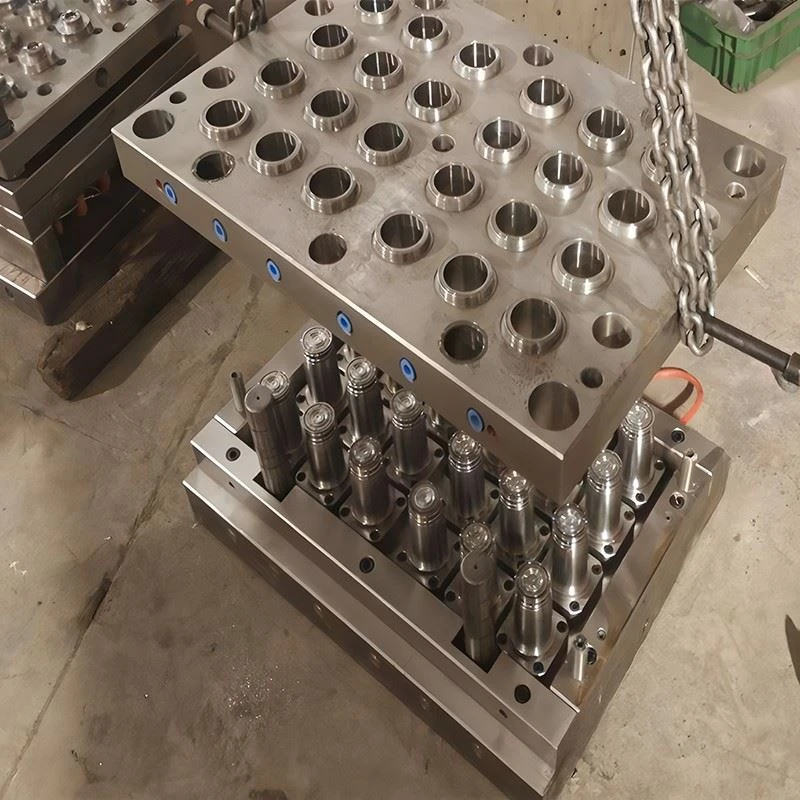

In high - volume scenarios, we generally recommend more frequent maintenance. For instance, if a 24 cavity 1881 water cap mould is used to produce upwards of 138,000 caps per day, a basic cleaning and inspection should be carried out every 2,000 - 3,000 production cycles. A more comprehensive maintenance routine, which may include disassembly, detailed inspection, and lubrication of moving parts, should occur once a week.
On the other hand, for low - volume producers making tens of thousands of 1881 bottle caps daily, the same cavity mould can endure more cycles between maintenance sessions. A basic check can be done every 5,000 - 7,000 cycles, and a full - scale maintenance per month.
Material Properties
The type of plastic material used in the Cap Injection Molding process also impacts the maintenance frequency. Different plastics have varying chemical and physical properties that can affect the mould.
For example, some plastics may contain additives or fillers that can leave residues on the mould surface. These residues can accumulate over time, leading to surface roughness and potentially affecting the cap's appearance and quality. If the material used is highly abrasive, such as glass - filled plastics, the mould will experience faster wear. In such cases, more frequent cleaning and inspection are necessary. A basic cleaning might be required every 1,500 - 2,500 cycles, and a detailed maintenance should be scheduled every 8,000 - 12,000 cycles.
In contrast, when using relatively clean and non - abrasive plastics, the maintenance intervals can be longer. A basic check can take place every 3,000 - 4,000 cycles, and a full maintenance every 15,000 - 20,000 cycles.
Operating Conditions
The operating conditions of the moulding machine also play a vital role. Temperature, humidity, and the stability of the injection pressure and speed can all impact the mould's condition.
High - temperature environments can cause the mould material to expand and contract, leading to internal stresses and potential cracking over time. Similarly, if the injection pressure is unstable, it can result in uneven wear on the mould. In a manufacturing environment with extreme temperature variations and inconsistent operating parameters, more frequent maintenance is required. A basic inspection should be carried out every 1,500 - 2,000 cycles, and a comprehensive maintenance every 7,000 - 10,000 cycles.
In a well - controlled environment with stable temperature, humidity, and operating parameters, the mould will experience less stress. Here, a basic check can be done every 2,500 - 3,500 cycles, and a full - scale maintenance every 12,000 - 18,000 cycles.
General Maintenance Guidelines
Basic Cleaning and Inspection
A basic cleaning and inspection should be a routine part of the production process. After each production cycle, operators can visually inspect the mould for any signs of damage, such as chips or cracks. They can also clean the mould surface to remove any plastic residues or debris. This quick check can help identify minor issues early on, preventing them from escalating into major problems.
For a more thorough basic cleaning, the mould can be removed from the machine and cleaned using appropriate solvents. The cooling channels should also be checked for blockages, as proper cooling is essential for the quality of the caps.
Comprehensive Maintenance
Comprehensive maintenance involves disassembling the mould, inspecting all components in detail, and replacing any worn - out parts. This process should be carried out by trained technicians.
During comprehensive maintenance, all moving parts of the mould, such as slides, ejector pins, and cores, should be cleaned and lubricated. The surface of the mould cavity should be polished to maintain a smooth finish, ensuring the caps are produced with high - quality aesthetics.
Tailoring Maintenance Frequency to Your Needs
As a Water Bottle Cap Mould supplier, we understand that each customer's production process is unique. That's why we offer customized maintenance plans based on your specific production volume, material usage, and operating conditions.
Our team of experts can work with you to analyze your production data and develop a maintenance schedule that maximizes the lifespan of your mould while minimizing production downtime. Whether you're using Plastic Bottle Cap Mould, PET Bottle Cap Mould, or 5 Gallon Cap Mould, we have the expertise to provide you with the best maintenance solutions.
Benefits of Regular Maintenance
Investing in regular maintenance of your water bottle cap mould offers numerous benefits. Firstly, it ensures the consistent quality of your bottle caps. A well - maintained mould produces caps with precise dimensions, smooth surfaces, and proper sealing properties.
Secondly, regular maintenance reduces the risk of unexpected breakdowns. This means less production downtime, which translates into higher productivity and cost savings.
Lastly, it extends the lifespan of the mould. By preventing excessive wear and damage, you can get more use out of your mould, ultimately reducing your overall investment in mould replacement.
Conclusion
Determining the maintenance frequency of a water bottle cap mould is a complex process that depends on multiple factors, including production volume, material properties, and operating conditions. By understanding these factors and following the appropriate maintenance guidelines, you can ensure the optimal performance of your mould.
As a leading Water Bottle Cap Mould supplier, we are committed to helping you achieve the best results in your production process. If you're interested in learning more about our mould products or customized maintenance plans, we encourage you to reach out to us. We're ready to assist you in making informed decisions and enhancing your production efficiency.
References
- Smith, J. (2022). "Best Practices in Plastic Mould Maintenance". Journal of Mould Technology, Vol. 15, Issue 2.
- Johnson, R. (2021). "The Impact of Material Selection on Mould Lifespan". International Journal of Manufacturing Science, Vol. 20, Issue 3.
- Brown, A. (2020). "Optimizing Mould Maintenance Schedules for High - Volume Production". Manufacturing Engineering Review, Vol. 18, Issue 4.