

As a supplier of PET Bottle Mold, I've often been asked about the relationship between the mold cavity number and production efficiency. It's a crucial topic in the manufacturing world, especially when it comes to producing PET bottles. So, let's dive right in and explore this connection.
Understanding Mold Cavity Numbers
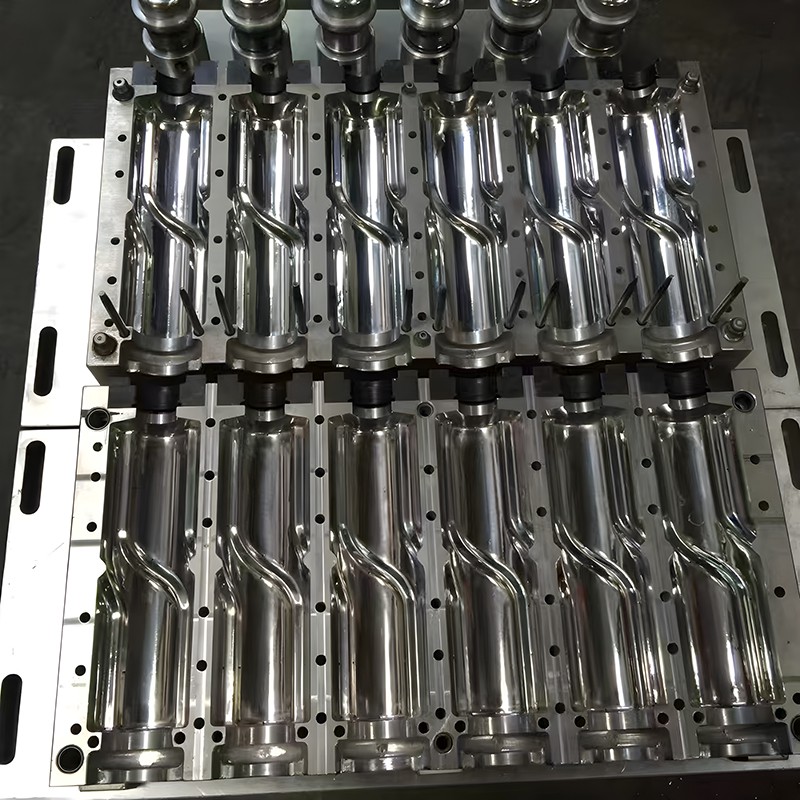
First off, what exactly is a mold cavity? Think of it as a space within a mold where the plastic material is injected to form a single bottle. The number of these cavities in a mold can vary widely. You can have molds with just one cavity, which is often used for prototyping or small - scale production. On the other hand, there are high - volume production molds that can have dozens of cavities.
For example, a simple, single - cavity mold is like a one - lane road. It can get the job done, but it's not very fast. You can only produce one bottle at a time. In contrast, a multi - cavity mold is like a multi - lane highway. It allows you to produce multiple bottles simultaneously, which has a direct impact on production efficiency.
How Cavity Number Affects Production Efficiency
Output Volume
The most obvious way the cavity number affects production efficiency is through output volume. Let's say you have a production cycle time of 10 seconds per cycle. With a single - cavity mold, you'll produce one bottle every 10 seconds. That's 360 bottles per hour. But if you have a 10 - cavity mold, you'll produce 10 bottles every 10 seconds, which means 3600 bottles per hour. That's a huge difference!
This increase in output volume is a game - changer for large - scale production. It allows manufacturers to meet high - demand orders in a shorter period. For instance, if a beverage company needs a large number of PET bottles for a new product launch, a multi - cavity mold can help them get the bottles they need quickly.
Cost - per - Unit
Another important aspect is the cost - per - unit. When you produce more bottles in each cycle, the fixed costs associated with each production run, such as machine setup, energy consumption, and labor, are spread over a larger number of units. This results in a lower cost - per - unit.
Let's take an example. Suppose the total cost of a production run (including machine setup, energy, and labor) is $100. With a single - cavity mold producing 360 bottles per hour, the cost - per - unit is approximately $0.28. But with a 10 - cavity mold producing 3600 bottles per hour, the cost - per - unit drops to about $0.03. This cost reduction can make a significant difference in the overall profitability of a manufacturing operation.
Production Flexibility
Multi - cavity molds also offer greater production flexibility. If you need to produce different types of bottles, you can design a multi - cavity mold with different cavity configurations. For example, you can have some cavities designed for small - sized bottles and others for large - sized bottles. This way, you can switch between different bottle sizes without having to change the entire mold, which saves time and increases production efficiency.
Limitations and Considerations
Initial Investment
While multi - cavity molds offer many advantages, they also come with a higher initial investment. Designing and manufacturing a multi - cavity mold is more complex and expensive than a single - cavity mold. The cost of the mold can be a significant barrier for small - scale manufacturers or those with limited budgets.
However, it's important to look at the long - term benefits. If you have a high - volume production requirement, the increased efficiency and lower cost - per - unit will eventually offset the initial investment.
Quality Control
As the number of cavities in a mold increases, so does the complexity of quality control. It becomes more challenging to ensure that each bottle produced in every cavity meets the same quality standards. There can be variations in factors such as wall thickness, shape, and finish.
To address this issue, advanced quality control systems and monitoring techniques need to be implemented. For example, using sensors to detect any deviations in the production process and making real - time adjustments.
Maintenance
Multi - cavity molds also require more maintenance. With more cavities, there are more parts that can wear out or get damaged. Regular maintenance is essential to ensure the longevity of the mold and the consistency of the production process.

Conclusion
In conclusion, the relationship between the mold cavity number and production efficiency is clear. A higher cavity number generally leads to increased output volume, lower cost - per - unit, and greater production flexibility. However, it also comes with challenges such as higher initial investment, more complex quality control, and increased maintenance requirements.
As a supplier of PET Bottle Mould and Plastic Bottle Mould, we understand the importance of finding the right balance for our customers. Whether you're a small - scale producer or a large - scale manufacturer, we can help you choose the mold with the appropriate cavity number to maximize your production efficiency.
If you're interested in learning more about our PET bottle molds or discussing your specific production needs, we'd love to hear from you. Contact us to start a conversation about how we can help you optimize your production process and take your business to the next level.
References
- "Plastic Injection Molding Handbook" by O. Olszewski
- "Manufacturing Processes for Engineering Materials" by S. Kalpakjian and S. Schmid