

In the realm of manufacturing, blow moulding machines play a pivotal role in the production of various plastic products, especially bottles and containers. As a supplier of Hand Blow Moulding Machines, I often encounter inquiries about the differences between hand blow moulding machines and automatic blow moulding machines. This blog aims to shed light on these differences, helping potential customers make informed decisions when choosing the right equipment for their production needs.
1. Operational Mechanism
Hand Blow Moulding Machine
A hand blow moulding machine is a type of equipment that requires significant manual intervention. Operators are actively involved in every step of the production process. They need to manually place the pre - forms into the mould. This hands - on approach demands a certain level of skill and experience from the operators. For example, when handling small - scale production of custom - shaped bottles, the operator can adjust the placement of the pre - form according to the specific requirements of the product. After placing the pre - form, the operator then activates the blowing process by using a control mechanism. The operator is also responsible for monitoring the blowing process to ensure that the product is formed correctly. This manual operation allows for a high degree of customization, as the operator can make real - time adjustments based on the visual inspection of the product.
Automatic Blow Moulding Machine
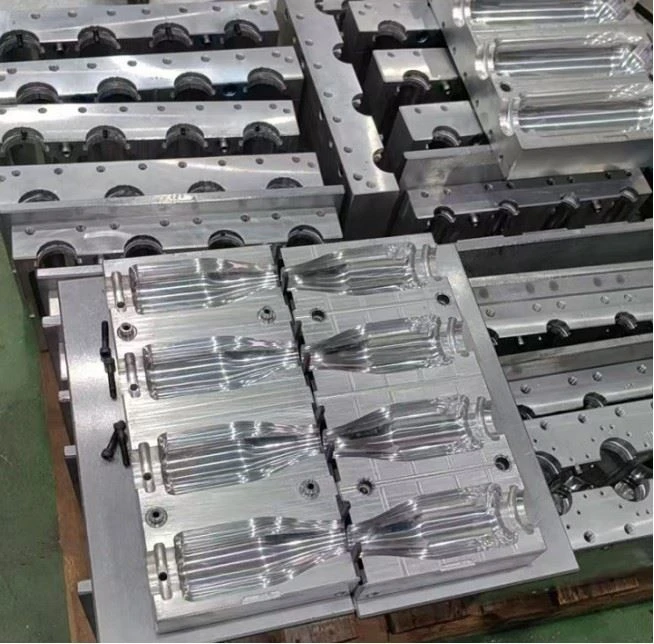
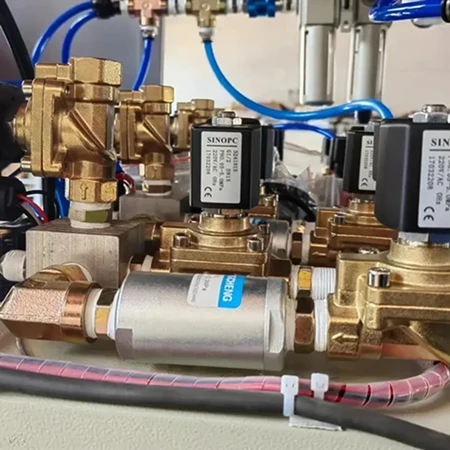
In contrast, an automatic blow moulding machine operates with a high level of automation. It is equipped with advanced sensors and control systems that can perform multiple tasks without much human intervention. The pre - forms are automatically fed into the machine through a conveyor system. The machine then precisely controls the heating, stretching, and blowing processes. For instance, in a large - scale production line, the automatic blow moulding machine can continuously produce a large number of identical products with high precision. The machine can adjust the blowing pressure, temperature, and other parameters according to the pre - set programs, ensuring consistent product quality.
2. Production Efficiency
Hand Blow Moulding Machine
The production efficiency of a hand blow moulding machine is relatively low compared to its automatic counterpart. Since the operator has to perform each step manually, the production speed is limited by the operator's skill and physical ability. For example, an experienced operator may be able to produce around 200 - 800 products per hour, depending on the complexity of the product. However, this rate can be significantly affected by factors such as fatigue and the need for frequent breaks. Additionally, the manual nature of the process makes it difficult to maintain a high - volume production over an extended period.
Automatic Blow Moulding Machine
Automatic blow moulding machines are designed for high - volume production. They can produce hundreds or even thousands of products per hour, depending on the machine's specifications. The automated processes reduce the time required for each production cycle, as there is no need for manual handling between steps. For example, in a large - scale bottle manufacturing plant, an automatic blow moulding machine can operate continuously for 24 hours a day, seven days a week, with minimal downtime for maintenance. This high - speed production capability makes automatic blow moulding machines ideal for mass - market products.
3. Product Quality and Consistency
Hand Blow Moulding Machine
The product quality of a hand blow moulding machine is highly dependent on the operator's skill. An experienced operator can produce high - quality products with good surface finish and accurate dimensions. However, there is a higher risk of variability in product quality. Small differences in the operator's handling, such as the placement of the pre - form or the blowing pressure applied, can lead to variations in the final product. For example, in the production of PET bottles, slight differences in the blowing process can result in uneven wall thickness or shape deformations.
Automatic Blow Moulding Machine
Automatic blow moulding machines offer a high level of product consistency. The automated control systems ensure that each product is produced under the same conditions, resulting in products with uniform dimensions, wall thickness, and surface finish. The machine can precisely control the heating, stretching, and blowing parameters, reducing the risk of defects. For example, in the production of plastic water bottles, an automatic blow moulding machine can produce thousands of bottles with the same shape and size, meeting the strict quality standards required by the market.
4. Cost Considerations
Hand Blow Moulding Machine
Hand blow moulding machines are generally more affordable in terms of initial investment. They have a simpler design and do not require complex automation systems, which reduces the cost of the machine. Additionally, the maintenance cost of hand blow moulding machines is relatively low, as they have fewer components that can malfunction. However, the labor cost associated with operating a hand blow moulding machine can be high, especially in regions with high labor costs. Since the production process is labor - intensive, the overall production cost per unit may increase, especially for large - scale production.
Automatic Blow Moulding Machine
Automatic blow moulding machines have a higher initial investment due to their advanced technology and automation features. The cost of purchasing and installing an automatic blow moulding machine can be several times higher than that of a hand blow moulding machine. However, in the long run, the labor cost savings can offset the initial investment. With high - volume production, the cost per unit can be significantly reduced, making automatic blow moulding machines more cost - effective for large - scale manufacturing.
5. Flexibility and Customization
Hand Blow Moulding Machine
One of the significant advantages of hand blow moulding machines is their flexibility and customization capabilities. Since the operator has direct control over the production process, it is easier to make changes to the product design. For example, in the production of 5 gallon bottles, the operator can create unique shapes and patterns by adjusting the blowing and shaping techniques. Hand blow moulding machines are also suitable for small - batch production of custom - made products, as they do not require expensive tooling changes.
Automatic Blow Moulding Machine
Automatic blow moulding machines are less flexible in terms of customization. Once the machine is set up for a specific product, it is difficult and time - consuming to change the production parameters. However, they are highly efficient for producing large quantities of standardized products. For example, in the production of plastic beverage bottles, the machine can be programmed to produce a specific size and shape, and it can continuously produce these products with high precision.
6. Applications
Hand Blow Moulding Machine
Hand blow moulding machines are commonly used in industries where customization and small - batch production are required. They are widely used in the production of high - end PET bottles, such as art glass, perfume bottles, and specialty containers. In the handicraft industry, hand blow moulding machines allow artisans to create unique and one - of - a - kind products. Additionally, they are suitable for small - scale manufacturers who need to produce a variety of products with different shapes and sizes.
Automatic Blow Moulding Machine
Automatic blow moulding machines are mainly used in large - scale industrial production. They are commonly found in the beverage industry for producing plastic water bottles, carbonated drink bottles, and juice containers. They are also used in the packaging industry for producing various plastic containers for food, cosmetics, and household products. The high - volume production capability of automatic blow moulding machines makes them ideal for meeting the large - scale demand of the market.
Case
Case Study 1: Hand Blow Moulding Machine – A Niche Perfume Bottle Studio in Grasse, France
Background:
A small, family-owned PET bottle studio in Grasse (the perfume capital of the world) specializes in producing limited-edition perfume bottles for luxury brands. Each batch is typically fewer than 5000 units, with unique ergonomic shapes and artistic finishes.
Why they chose a Hand Blow Moulding Machine (based on article's Section 5 & 6):
High customization required – Every order involves different curves, thickness variations, and decorative elements.
Small batch sizes – High tooling costs for automatic machines are unjustifiable for runs under 5000 pieces.
Artisan skill value – Skilled operators manually adjust blowing pressure and preform positioning in real time, creating bottles that feel handcrafted yet precise.
Results (reflecting article's Section 3 and 4):
Production speed: ~500–600 bottles per hour per operator.
Defect rate: Initially 8–10% due to human variance, but after 6 months of training, reduced to 3–4%.
Key advantage: The studio successfully produced 12 unique SKUs in one month without any machine retooling, something impossible with an automatic machine.
Cost insight: Low machine investment (under $12,000/set) allowed them to start with just 2 machines. Labor cost is high in France, but the selling price per bottle (>€0.55) easily covers it.
Case Study 2: Automatic Blow Moulding Machine – A Large-Scale Water Bottle Plant in Jakarta, Indonesia
Background:
A mid-sized packaging company supplies 350mL and 500mL PET water bottles to a national beverage brand. Daily demand exceeds 150,000 bottles, with very tight dimensional tolerances (±0.1mm in neck finish).
Why they chose an Automatic Blow Moulding Machine (based on article's Section 1, 2 & 3):
High volume, low variety – Only two bottle sizes, produced year-round.
Consistency is critical – Automatic machines with servo-controlled stretching and infrared heating ensure every bottle has uniform wall thickness, avoiding leakage under carbonation pressure.
24/7 operation – As mentioned in the article, the machine runs continuously with minimal downtime.
Results (reflecting article's Section 4 – cost efficiency):
Production rate: 8500 bottles per hour (one 6-cavity machine), vs. ~200–800/hour for hand machines.
Defect rate: Consistently below 0.05%, enabled by closed-loop pressure and temperature control.
Labor cost savings: 2 machine operators per shift (total 6 per day) vs. 25 hand-blow operators for the same output. Payback period for the automatic machine (≈$96,000) was 8 months.
Flexibility trade-off: Changing to a new bottle mould takes 0.5 hours and requires new moulds ($3,500/set), but since they only run two designs annually, this is negligible.
Conclusion from plant manager:
"Yes, the automatic machine costs 20x more upfront. But on a per-bottle basis, our cost dropped from $0.07to $0.035. For mass production, there is no alternative."
Conclusion
In conclusion, both hand blow moulding machines and automatic blow moulding machines have their own advantages and disadvantages. Hand blow moulding machines offer high flexibility and customization, making them suitable for small - batch production and high - end products. On the other hand, automatic blow moulding machines provide high production efficiency, product consistency, and are more cost - effective for large - scale manufacturing.
If you are considering purchasing a blow moulding machine, it is essential to evaluate your production needs, budget, and the level of customization required. As a supplier of Hand Blow Moulding Machines, we are committed to providing high - quality equipment and professional advice to help you make the right choice. If you have any questions or are interested in our products, please feel free to contact us for further discussion and procurement negotiation.
For more information about related products, you can visit the following links:
Stretch Blow Molding Machine
Bottle Water Blowing Machine
Semi Auto Bottle Blower
References
- Blow Moulding Technology Handbook, edited by industry experts.
- Research papers on plastic manufacturing processes from academic journals.