

Hey there! As a supplier of Jar Preform Moulds, I've seen firsthand how crucial it is to have an optimized design. In this blog, I'm gonna share some tips on how to make the most out of your Jar Preform Mould design.
First off, let's talk about the material. The choice of material for your Jar Preform Mould can have a huge impact on its performance and longevity. You want to go for a high - quality steel that can withstand the high pressures and temperatures involved in the preform manufacturing process. Stainless steel is a popular choice because it's corrosion - resistant and can handle the wear and tear over time.
Another important aspect is the cooling system. A well - designed cooling system is key to ensuring uniform cooling of the preform. Uneven cooling can lead to issues like warping, stress marks, and inconsistent wall thickness. You can use a combination of cooling channels within the mould and external cooling methods. For example, having spiral cooling channels can improve the flow of coolant and provide more efficient heat transfer.
The cavity layout also plays a big role. When designing the cavities in your Jar Preform Mould, you need to consider the number of cavities based on your production volume. More cavities mean higher production rates, but you also have to ensure that each cavity gets the same amount of material and pressure. Balancing the runner system is essential. A balanced runner system distributes the molten plastic evenly to all the cavities, preventing issues like short shots in some cavities while over - filling others.
Now, let's talk about the gate design. The gate is the point where the molten plastic enters the cavity. There are different types of gates, such as hot runner gates and cold runner gates. Hot runner gates are great because they reduce waste and allow for more precise control of the plastic flow. They keep the plastic in a molten state, so there's no need to cut off the runner system after each cycle. Cold runner gates, on the other hand, are simpler and cheaper but may result in more waste.
Surface finish is often overlooked but is super important. A smooth surface finish on the mould can prevent the preform from sticking to the mould and also improve the aesthetic quality of the preform. You can use techniques like polishing to achieve a high - quality surface finish.
If you're in the market for a Jar Preform Mould or a PET Preform Mould, you know that the design optimization can make a world of difference in your production process. A well - optimized Jar Preform Mould can increase your production efficiency, reduce costs, and improve the quality of your preforms.
Let's also consider the maintenance factor. An optimized design should be easy to maintain. This means having accessible areas for cleaning, inspection, and repair. You don't want to spend hours trying to reach a small part of the mould for maintenance. Simple and straightforward designs are always better in the long run.
When it comes to the size and shape of the preform, you need to design the mould accordingly. The mould should be able to produce preforms that can be easily blown into the desired jar shape. You need to consider factors like the neck finish, the body diameter, and the overall height of the preform.
If you're looking for a PET Preform Mold, make sure the design takes into account the unique properties of PET. PET has specific melting points, shrinkage rates, and flow characteristics. Your mould design should be optimized to work with these properties to produce high - quality preforms.
In addition to the technical aspects of the design, you also need to think about the ergonomics. The mould should be easy to install and operate. Workers should be able to handle the mould without any major difficulties. This can improve the overall safety and productivity of your manufacturing process.
Now, let's get into some real - world examples. I've worked with clients who initially had issues with their preform production. After optimizing the Jar Preform Mould design, they saw a significant improvement in their production output. For instance, by re - designing the cooling system, they were able to reduce the cycle time by almost 20%. This led to a substantial increase in their daily production volume.
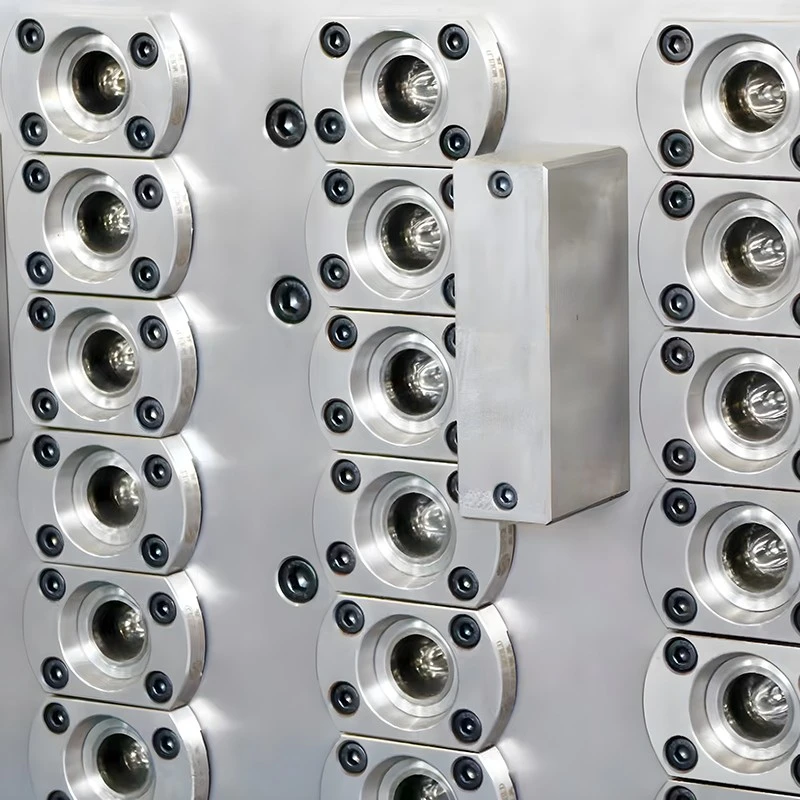

Another client had problems with inconsistent wall thickness in their preforms. By optimizing the runner system and the gate design, we were able to ensure that each cavity received an equal amount of plastic, resulting in preforms with uniform wall thickness.
So, if you're struggling with your Jar Preform Mould design or looking to improve your production process, don't hesitate to reach out. I'm here to help you optimize your mould design and take your preform production to the next level. Whether you need a new PET Preform Mould or want to enhance your existing Jar Preform Mould, I've got the expertise to assist you.
If you're interested in discussing your requirements or have any questions about PET Preform Mold design optimization, feel free to contact me. Let's work together to create a mould design that meets your production needs and exceeds your expectations.
References:
- Injection Molding Handbook by O. J. Roylance
- Plastics Processing by Christopher Rauwendaal